Great are the works of God, to be pondered by all who delight in them. Psalm 111:2

This beautiful 12th century mosaic of God at work creating the cosmos is from the Monreale Cathedral in Sicily.
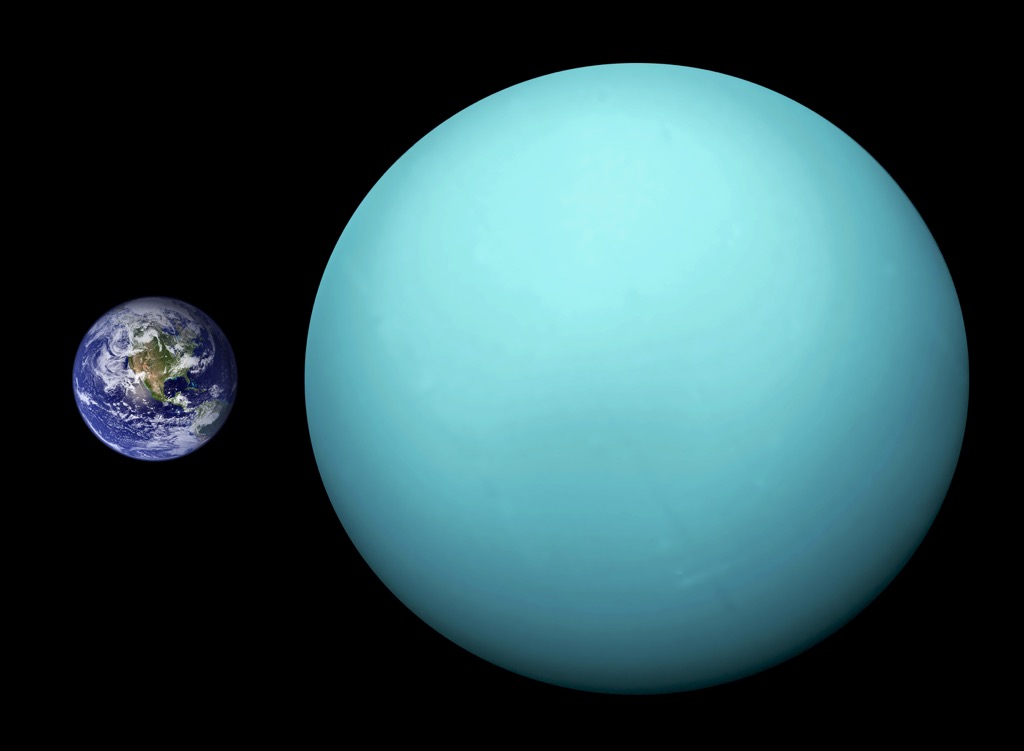
Uranus, let’s face it, is a little different. It’s the only known planet that rotates on a horizontal axis opposite from the vertical orbiting of the other planets in our Milky Way galaxy.
Commons. Wikimedia
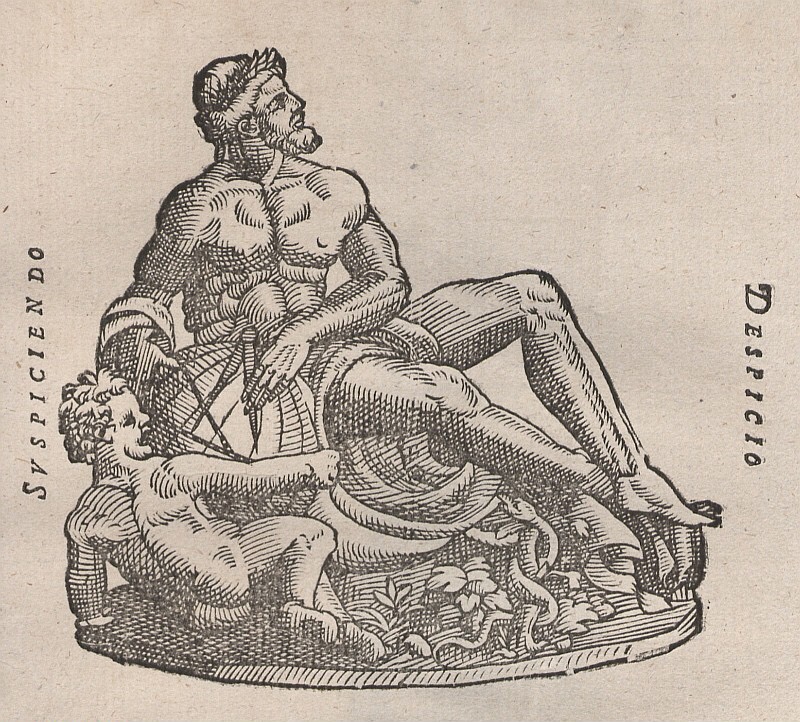
The beautiful blue-green sphere has been associated with eccentricity, sudden unanticipated changes, astronomers, innovative thinkers, and cosmic radiation. Uranus is named for the Greek god of the sky pictured here in a 17th century woodcut on paper by the Danish astronomer Tyge Ottesen Brahe.
Urania, a great-granddaughter of Uranus and one of the nine Greek Muses is known to us as the muse of astronomers and Christian poets. Her name appears on several astronomical observatories in Europe.
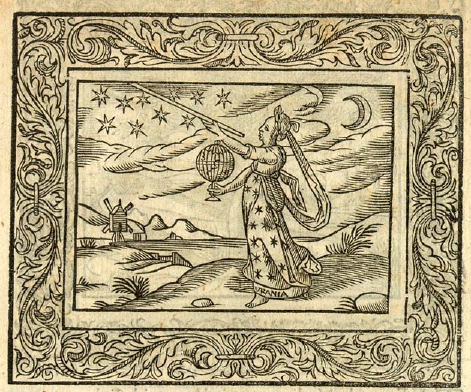
Urania’s foot is often seen resting on a turtle, a symbol of silence. “…Men who have been instructed by her she raises aloft to heaven, for it is a fact that imagination and the power of thought lift men’s souls to heavenly heights.” Diodorus Siculus Library of History
That could be addressed to astronomers of today who explore celestial mysteries (and, of course, to us.)
Let’s zip around space and look at what’s new, surprising and eccentric in the universe. I’m fascinated by the beauty of a 2014 image of gamma ray light in the center of the Milky Way galaxy. It’s from NASA’s Fermi gamma ray space telescope. 2015 is the UN International Year of Light! Check out NASA.org
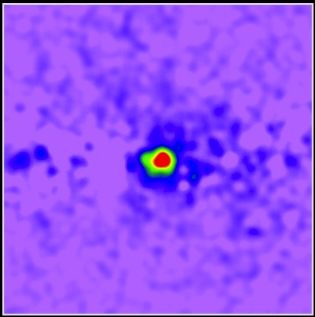 Gamma ray light is the most energetic light in the universe. Scientists believe that excess emissions from these rays (you see them in the outer blue spots) cannot be explained either by pulsars or super nova remnants but could be produced by an annihilation of dark matter particles.
Dark matter sounds so mysterious. When I ponder it I think first of the underworld and not the skies. Dark matter is an unknown, unseen substance making up 28% of the universe. It effects both us (we’re normal matter, 5% of the universe) and radiation through gravity. All we know is that dark matter is made up of exotic particles. What’s even more mysterious is that 68% of our universe is made up of dark energy. Scientists wonder if it’s a dynamic fluid or a new kind of energy field. Other questions innovators ponder: Do we need a new theory of gravity? Is dark energy growing as it swallows up dark matter? Since dark energy counteracts gravity by pushing space-time apart, it appears to be driving the universe apart at an accelerating speed. Will the universe ever stop expanding? What is its destiny?
As for now, we’re told we don’t even know how to look for 70% of the total contents of the universe…. similar to “still searching” the unexplored depths of the unconscious or the mysteries of God beyond space and time. Uranian innovators arise! As for me I’d best settle into my chair with a few deep breaths as I contemplate the silence of the inner universe.
I felt the need of a great pilgrimage so I sat still for three days and God came to me. Kabir
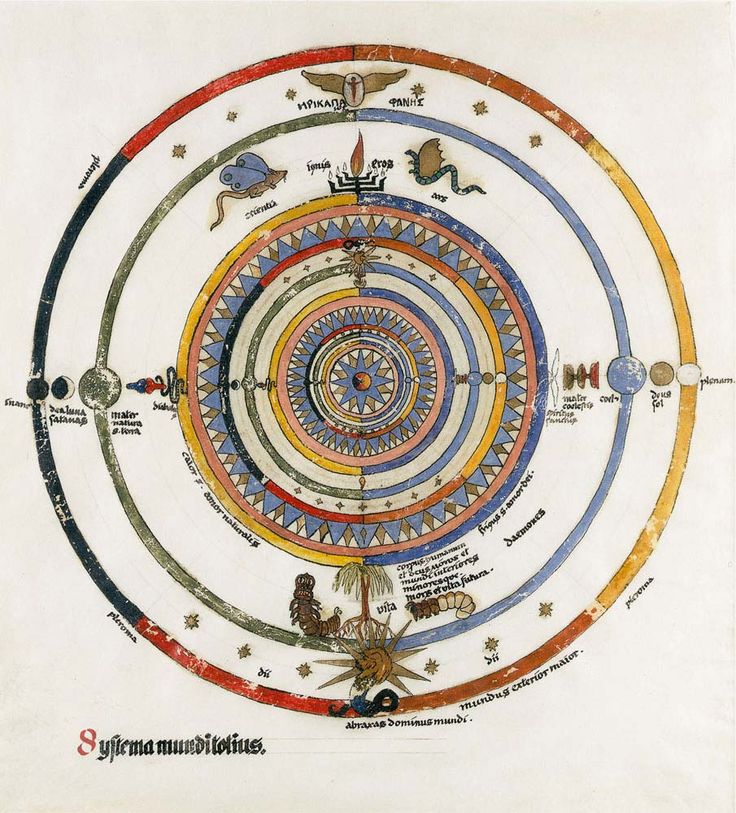
The center of the gamma ray photo reminds me of the “Eye of God” or of the sacred space of a mandala where consciousness is focused at the center – they are so healing and soothing to draw. Carl Jung’s first mandala is pictured on the left.
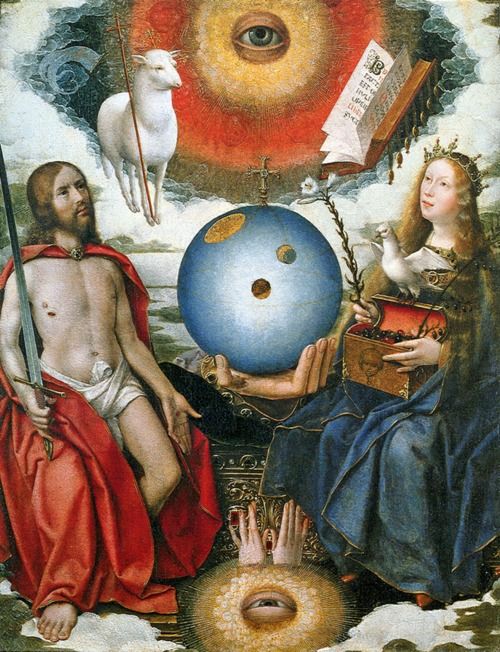
Jan Provoost’s 16th Century Christian Allegory on the right shows us a Flemish artist’s depiction of the eye of God with Earth in the center of the cosmos.
A circle with a point in the center (circumpunct) is an archetypal symbol. The center has been thought of as a point around which the wheel of eternity evolves – God within circled by infinity. It speaks of the source from which all creation arises and returns.
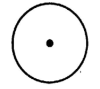 It’s the symbol of the sun and the alchemical symbol for gold. The point in a circle may be viewed as an archetype of the psyche representing the transcendent Self, a locus of integration, balance and creative power. To Hindu’s, it’s Bindi, the spark of life within the cosmic womb.
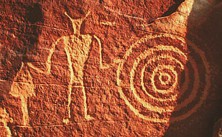
This petroglyph is from the Paleolithic period.
Consider the Omega Point – Teilhard de Chardin’s eternally existing point (Christ) to which the universe evolves until it reaches maximum complexity and consciousness in a realized union.
We know that Uranus energy likes to stir things up and go against established thought. Do you see yourself in any way here? Max Tegmart, a theoretical physicist at MIT, known as “Mad Max” is a proponent of the multiverse theory. Try to imagine so many other parallel universes that there’s an infinite number with every possible number of physical constants, all existing simultaneously (created by myriad bubbles of space-time from a fraction of a second after the Big Bang.) Many scientists think this might be likely. Although we can’t see parallel universes we can surely see into our hearts that are open to wonder.
Let’s descend from the heavens to the microscopic earth. There’s really eccentric behavior in subatomic particles. Each may act like a wave or a cloud, popping in and out of existence, entangled with one another even when light years apart. The concept of subatomic entanglement sounds much like the perennial spiritual revelation that tells us how deeply interconnected we all are in this one sacred world.
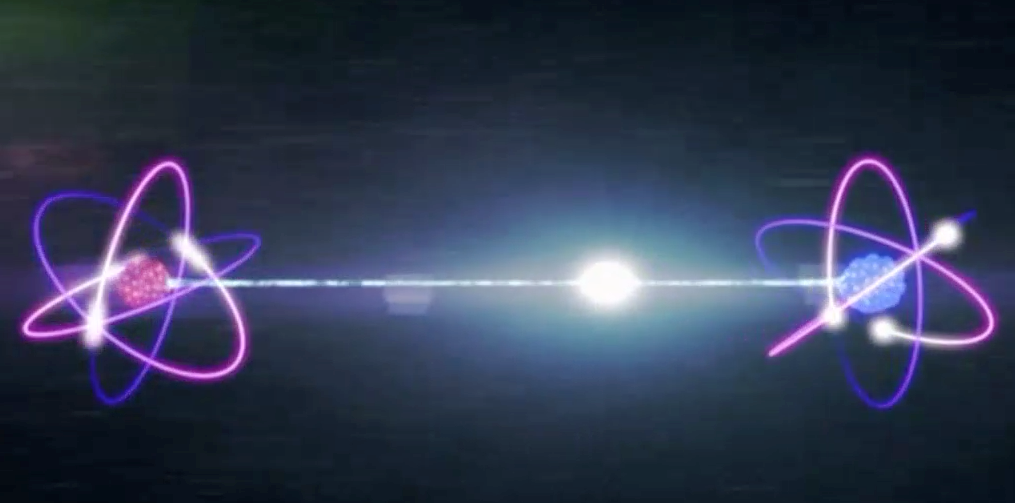
In the midst of increasing complexity and diversity, how lovely to imagine creation entangled in one original and eternal unity. Some scientists believe that creation from “nothing” can occur at the level of subatomic particles in what’s known as a “quantum foam.” That’s a wow!
In the future we can expect some revolutionary paradigm shifts in physics, a continuing and fascination dialogue between spirituality and science and that Uranian energy shaking up our own lives a bit.
It’s fitting to end where we began with Urania, her toe on a turtle, silent, gazing at the cosmos with wonder and inner wisdom.
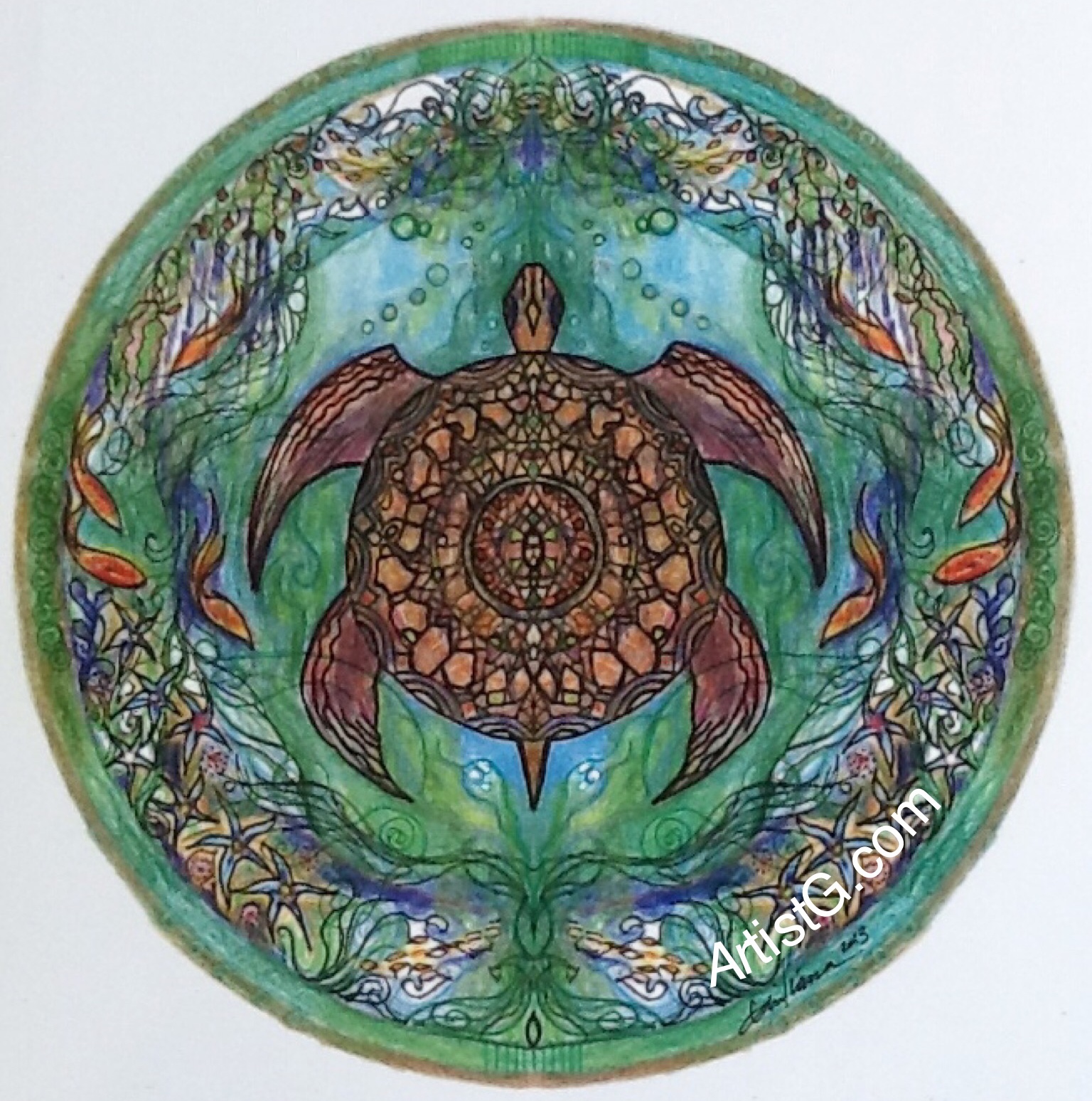
I couldn’t resist this sea turtle shown with permission of the award-winning artist Giuliana Falco. At ArtistG.com you can view her work which includes many exquisite mandalas.
THE ASTRONOMER
There was once an astronomer whose habit it was to go out at night and observe the stars. One night, as he was walking outside the town gates, gazing up absorbed in the sky and not looking where he was going, he fell into a dry well. As he lay there groaning, someone passing by heard him and coming to the edge of the well, looked down, and on learning what had happened, said, “If you really mean to say that you were looking so hard at the sky that you didn’t even see where your feet were carrying you along the ground, it appears to me that you deserve all you’ve got.” Aesop’s Fables
So in the days ahead, tread lightly but with a firm step on the earth, dear friends. As the tortoise said in another of Aesop’s Fables, “Be it ever so humble, there’s no place like home.”
Mary Catherine


“When I behold your heavens, the work of your fingers, the moon and the stars which you set in place, what is man that you should be mindful of him? Or the son of man, that you should care for him?” (Psalm 8::4)
I especially enjoy the turtle mandala by Giuliana Falco. Words fail us. But the artist captures the wonder of God’s unity and tranquility.
LikeLike