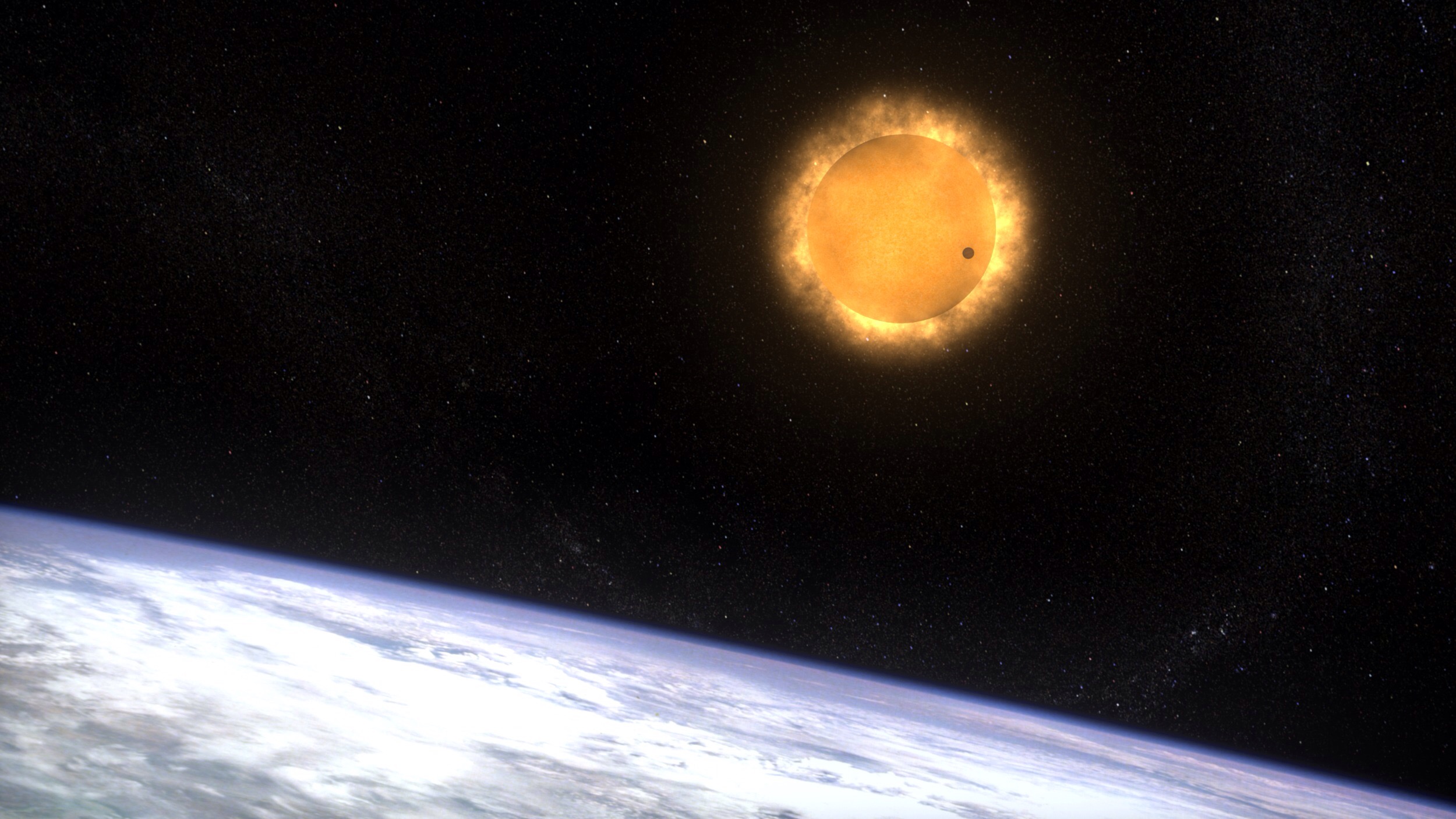
NASA/Goddard Space Flight Center
I am my beloved’s and my beloved is mine. Song of Songs 6:3
We draw near to Venus, the bright celestial beacon associated through time immemorial with beauty and love. Further associations include: romance, sensuality, pleasure, peace, harmony, even laughter and relaxation. For the men who are reading this – although Venus is considered a feminine planet, these qualities within you bring balance to your lives and give you a lens to view the women you relate to each day.
As we explore the planet, hold these questions close:
What is it that attracts me and delights me? Where do I find joy? What do I truly value? Answering these, you’ll be calling forth the pleasures and the gifts of Venus.
While writing, I hear a distinctly romantic, instrumental version of the song Embraceable You playing softly on the radio in the kitchen. Dan Troxell on the piano.
I love all the many charms about you. Above all I want my arms around you.
This hemispheric view of Venus is from NASA’s Magellan Mission.
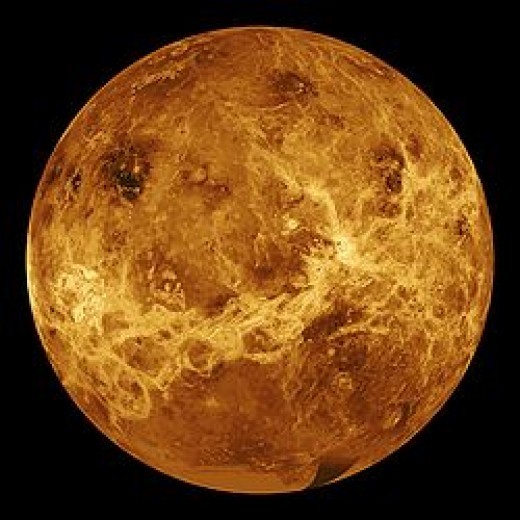
Venus is our closest neighbor in the solar system, the second largest planet from the sun and the brightest one in the sky after the sun and the moon. It was called by Pythagoras the Sol Alter, the Other Sun, because of its radiance. Up close the planet is surrounded by a dense layer of carbon dioxide and nitrogen clouds hovering over a surface of volcanoes and lava plains heated to an incredible six hundred degrees celsius.
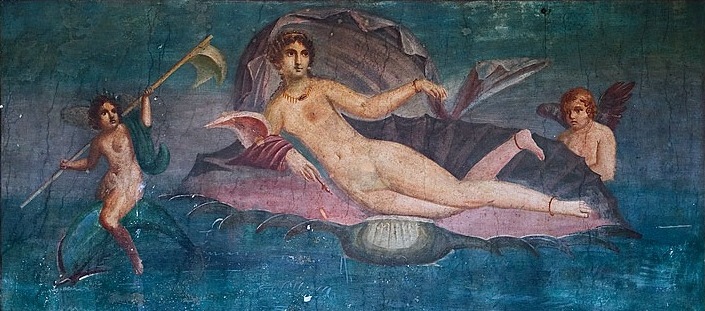
The Roman goddess Venus (Aphrodite to the Greeks) rose sensuous at birth from the blue depths of the sea, nurtured by the sea-foam.
Aphrodite roaming over the waves like sea-lettuce, moving her soft-skinned body in her voyage over the white calm sea, she pulls the breakers along her path…over the silver on dancing dolphins ride her sons, guileful Eros (Love) and laughing Himeros (Desire). The Anacreontea, Greek Lyric II
The most memorable painting of her is Botticelli’s The Birth of Venus.
An earlier 1st century A.D. Venus resting on a seashell is from the Casa di Venus in Pompeii.
Venus was identified with her goddess predecessors Inanna, Ishtar and Astarte, the latter a first millennium BC Syrian goddess of love and fertility. According to myth, the birth of Astarte happened when a large egg fell into the Euphrates river. Two fish rolled it to the bank. A dove sat upon it and heated it until it hatched – Astarte!
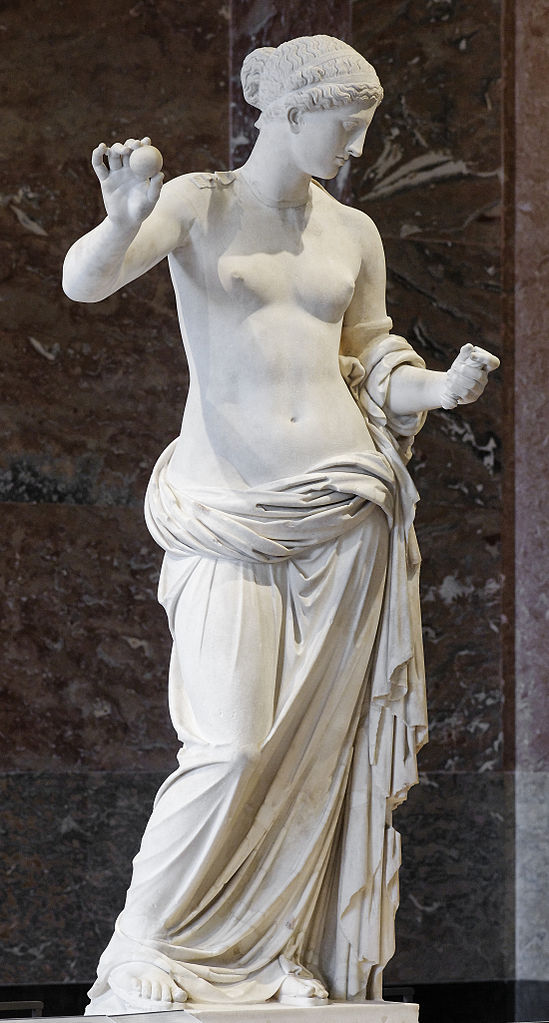 From the “mists of myth”, doves and fish have always been sacred to Venus. She is also a friend of flowers, especially roses. Her attributes include a scallop or cockle shell, a mirror and apples. April is her month – when we enjoy the pleasures of spring and fertility. Pictured is the beautiful Venus of Arles, a marble statue from the 1st century BC now housed in the Louvre Museum in Paris, the city of love and romance.
She’s holding an apple in her right hand. Legend has it that Venus vied with her goddess sisters Hera and Athena for the “fairest of all prize” – the Golden Apple. Paris of Troy awarded it to Venus because as the goddess of desire she promised to grant him the beautiful mortal woman, Helen of Troy, for his wife. (Unfortunately Helen was already married and his abduction of her led to the Trojan War.) Over time the “Venus apple” came to symbolize sexuality and love. It was later interpreted to be the biblical forbidden fruit.
“Mirror, mirror on the wall, who is the fairest of them all’? Notice the left hand of Venus. She holds a mirror and looks upon her physical loveliness. We know a mirror shows up blemishes as well. Around my hidden edges have I gazed with awareness and seen reflected back, the darker side of Venus – vanity, jealously, bitterness, possessiveness, emotional betrayal of my deeper values? (My goodness!) Time for all of us to clean our mirrors. But look! A very clear truth revealed in the mirror is that we radiate the beauty and light of the Divine loveliness.
I discovered an eighth century painting of Kichijoten, the Hindu and Japanese Buddhist goddess of beauty, fertility and happiness. In her left hand is a sacred wish-granting jewel. Doesn’t it look like a small apple?
 Tokyo National Museum
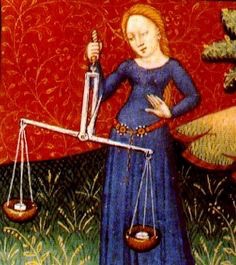 Venus rules the astrological signs of both Libra and Taurus. Libras’ scales of justice represent, in part, a balancing of give and take that creates harmonious relationships. We experience Taurus (the bull is its symbol) when we’re in touch with our bodies and take delight in the natural pleasures of everyday life and the beauties of nature – like my flourishing plant, a dove at the window and dancing in the morning in the kitchen.
Confucius said everything has beauty but not everyone sees it. What we do see is in the eye of the beholder and there’s a neurological basis for it. When we look at something we consider beautiful, whether a person we love, a sunset or a piece of art, or even a sublimely pure mathematical formula (if you’re a mathematician), the emotional brain is activated with an ensuing feeling of exhilaration.
There is beauty for all to see in the harmony, proportion, symmetry and mathematical order of the universe. The 13th century mathematician Fibonacci’s elegant sequence of numbers underlies the logarithmic spiral. We’ve been fascinated to find the spiral in shapes in nature like the nautilus shell, the sunflower and spiral galaxies.
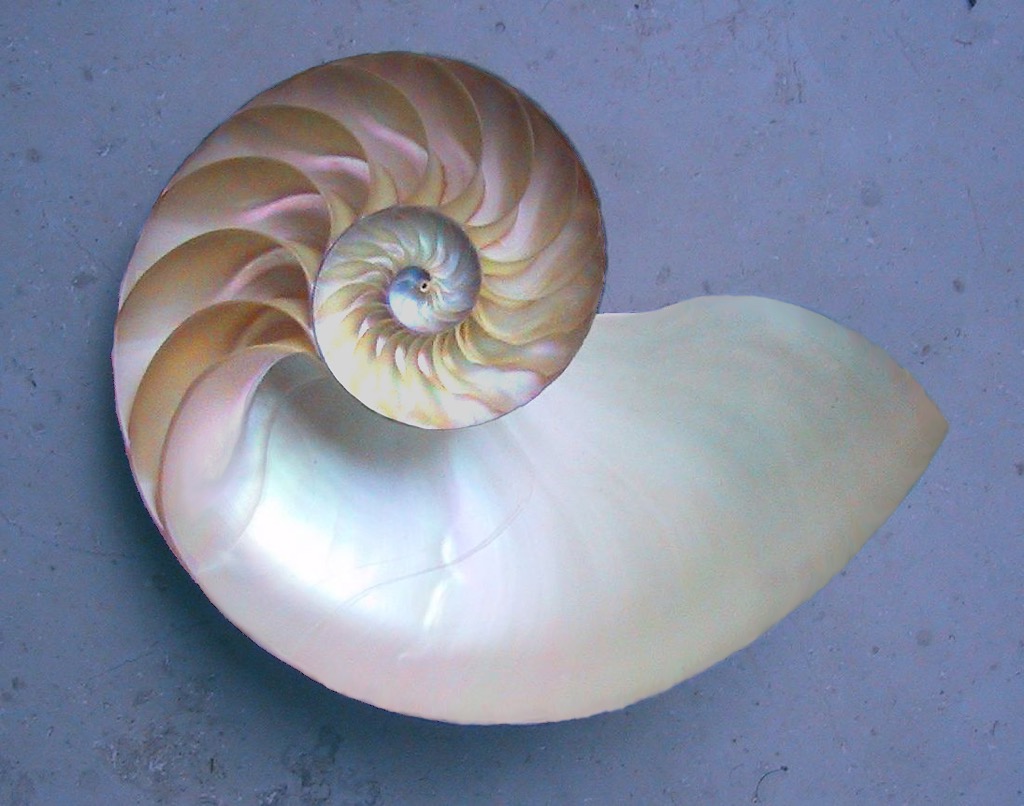

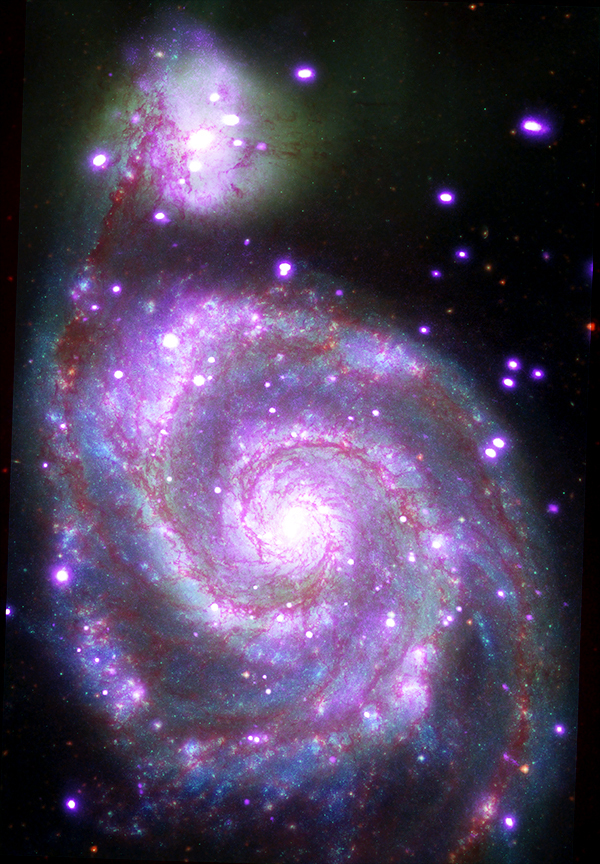
Did you know that new stars are being formed in clouds of dust and hydrogen gas along the outer edges of the arms of a spiral galaxy? Stars are seen to travel from their birthplace in curves because of the nature of gravity and the curvature of space-time. In my own home spiral designs appear almost everywhere – in furniture, rugs, paintings, clothing. I’ve been so attracted to them, at first unconsciously. Did you ever notice your own extended arm? When you offer it in that grateful curved gesture to invite a loved one near, to help another or to flexibly curve into dance, could you, symbolically speaking, be echoing a gesture made in the heavens that sends out the stars?
Curving back within myself I create again and again. The Bhagavad Gita
Everyday surprises of light and color delight me as do Mozart, songbirds and trees, impressionist art and “ou la la” Paris.
 Glen Miller wrote the lyrics to this song from the 1940’s: Our love affair will be such fun, will be the envy of everyone. Those famous lovers we’ll make them forget, from Adam and Eve to Scarlett and Rhett. When youth has had its merry fling we’ll spend our evenings remembering two happy people who say on the square, isn’t ours a lovely love affair.
We always knew beauty was more than skin deep. When the Navajos pray, “In beauty may you walk”, the reference is surely to the presence of the Spirit as an expression of boundless love. Early Christian theologians lauded God as beauty, St. Augustine in his Sermons asked, “Who made these beautiful changeable things if not the one who is beautiful and unchangeable?” Gregory of Nyssa, the youngest of the 4th century Cappadocian Fathers, identified beauty as the foremost characteristic of God, a beauty reflected in the mirror of our own souls as the primal blessedness of our nature. The word good as in “Jesus, the Good Shepherd” is from the Greek kalos which means “beautiful, of the finest quality, honorable.” Beautiful Shepherd!
Out of Zion, the perfection of beauty, God shines forth. Psalm 50:2
In the Hebrew Scriptures, the Song of Songs uses images of sensual desire as metaphor for the soul escorted to a spiritual union with God.
How beautiful you are my friend, how beautifu! your eyes are doves! 1:15
Wander with me back to the fertile earth where grasses and flowers grow under the feet of Venus and waves wash languidly to sand-strewn shores, down to the microscopic world where particles are irresistibly attracted to one another, where an evolutionary impulse moves creation to go beyond the current forms, to self-transcend and become more and more the fully beautiful and conscious realization of love. Divine presence allures in the depths and just a taste is delightful, sweet as honey.
Driven by forces of love, the fragments of the world seek each other so that the world may come into being. Pierre Teilhard de Chardin, The Phenomenon of Man (1955)
Lyrics of a Shaker hymn come to mind as I close the post, resting now, my thoughts lingering on the lovely Venus.
‘Tis the gift to be simple. ‘Tis the gift to be free. ‘Tis the gift to come down where we ought to be. And when we find ourselves in the place that’s right, ‘Twill be in the valley of love and delight.
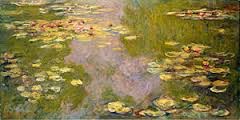 Claude Monet, Water Lily Pond, 1919
My friend, may your heart more and more take up residence in the valley of love and delight,
Mary Catherine


How grateful your viewers are to be taken to ‘the valley of love and delight’ – and, so appreciative of the guide who clearly has spent much time there herself.
Betsy
LikeLike
The deep longing for God, which is part of our human condition, is fulfilled in our Venus energy. The Divine Lover embraces us and invites, every day, into deeper light and beauty. “Delight in the Lord, and he will give you the desires of your heart.” Thank you, dear soul guide, for leading your readers into cherishing all that our Beloved is within and among us.
LikeLike
Beautiful, Emma. Thank you…..Michele
LikeLike