“.He casts down to the depths of the nether world, and he brings up from the great abyss…” Tobit 13:2
Pluto has been quite the celebrity of late. Although it’s been around for the last 4.5 billion years, it was only on July 15th of this year that NASA’s New Horizons spacecraft made a spectacular flyby close enough to take this photo of its surface, revealing icy mountains, frozen tundra and an irregularly shaped region referred to as the Tombaugh Reggio or “the heart.”
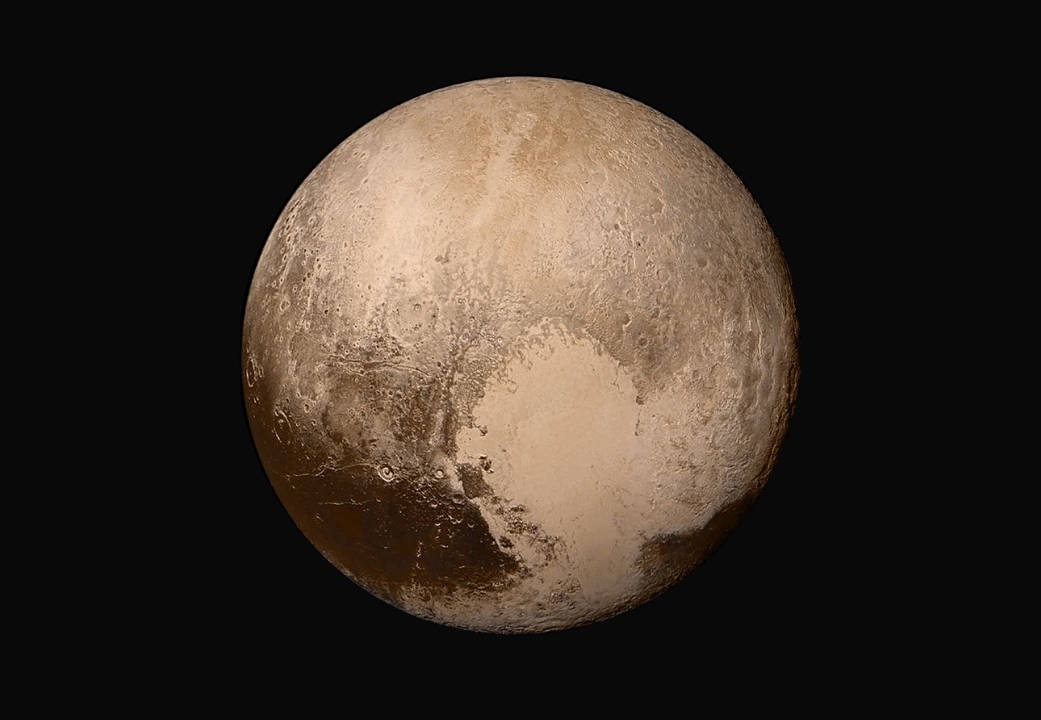
I’m one of millions thrilled by the success of the Pluto Mission which had the fastest spacecraft in history (36,000 miles per hour) traveling to the planet that is the most distant from the sun but the slowest in space (248 years to orbit the sun). But wait – Pluto was reclassified as a dwarf planet in 2006. Controversy over this ruling involves indignant astronomers and public alike.
The International Astronomical Union has placed Pluto in a subclass of dwarf planets 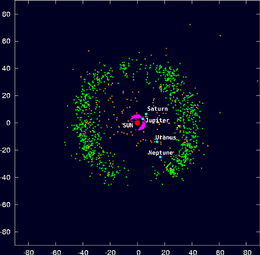 called plutoids along with its twin Eris and others – all small icy bodies in the Kuiper Belt, the region beyond Neptune’s orbit where numerous space objects, other plutoids and comets await discovery. But explorers of the heavens know that the Kuiper Belt is not our last frontier in space. There are billions of exoplanets orbiting distant stars within and beyond our galaxy. I love this mandala-like photo of the Kuiper Belt ringed around our sun and planets.
Pluto was discovered in 1930 by Clyde Tombaugh at the Lowell Observatory in Flagstaff, Arizona. Percival Lowell, for whom this observatory is named, had predicted the existence of Pluto fifteen years before it’s actual discovery. Hearing of a contest to name the new planet, an 11 year old girl in Oxford, England, fascinated by Greek and Roman mythology, suggested the name Pluto to her grandfather who referred this winning appellation to the Lowell Observatory staff.
Pluto is smaller than our moon, has an icy temperature of 375-400 degrees below zero and an eccentric elliptical orbit. Charon is its largest moon. (In Greek mythology Charon ferried people over the river Styx to the land of the dead).
From the starry skies we’ll descend to the land of the dead. The underworld was named for the Greek god Hades, “the hidden one.” His Roman counterpart, Pluto, ruled this underworld along with all the riches found beneath the earth.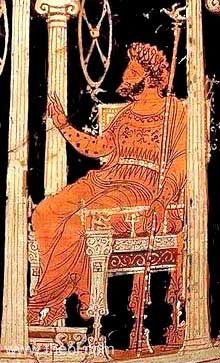
Thus, Pluto had two faces – the fearsome god of death and the blessing god of the hidden wealth of fertile soil, precious metals, ores and gems to be found underground. Pluto’s attributes are the key of Hades, Cerberus (the hound that guarded hell) and the white poplar trees whose leaves are white on one side and dark on the other side.
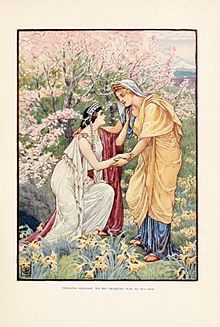
What follows is an interesting myth about our dark and gloomy Hades. The maiden Persephone, daughter of Demeter, the goddess of the harvest and of the cycle of life and death, was playing happily in the flowers of the meadow when Hades, driving a golden chariot drawn by four black horses, swiftly abducted her into the 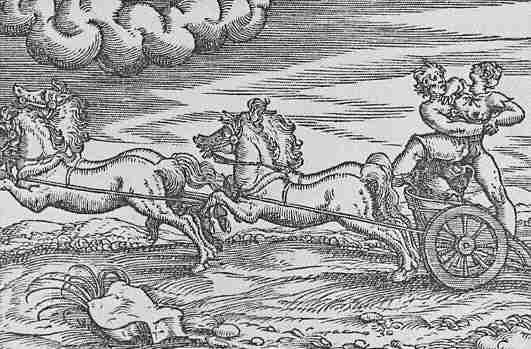 underworld to be his queen. The distraught Demeter caused a severe drought upon the earth as a way to prevail upon Zeus to assure her daughter’s release. This he was wiling to do provided she had eaten nothing underground. But Hades tricked Persephone into eating pomegranate seeds. The gods eventually came upon a compromise. Forever after Persephone would spend two thirds of the year on earth and one third in the underworld. Thus Persephone became a symbol of the cycle of nature’s renewal. How happy Demeter is to greet Persephone in the Spring!
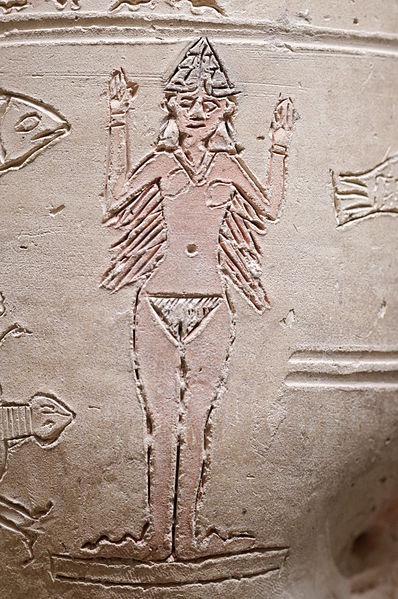 World history speaks to the intense mystery of birth, death and regeneration. In the Neolithic and Bronze Ages, the goddess held within herself the continuum of life. Her icons of the bird (breath of of life, fertility) and snake (barrenness and death, rebirth) inspired reverence and awe. This image of the winged Ishtar on a vase from 2000 BCE is housed in the Louvre.
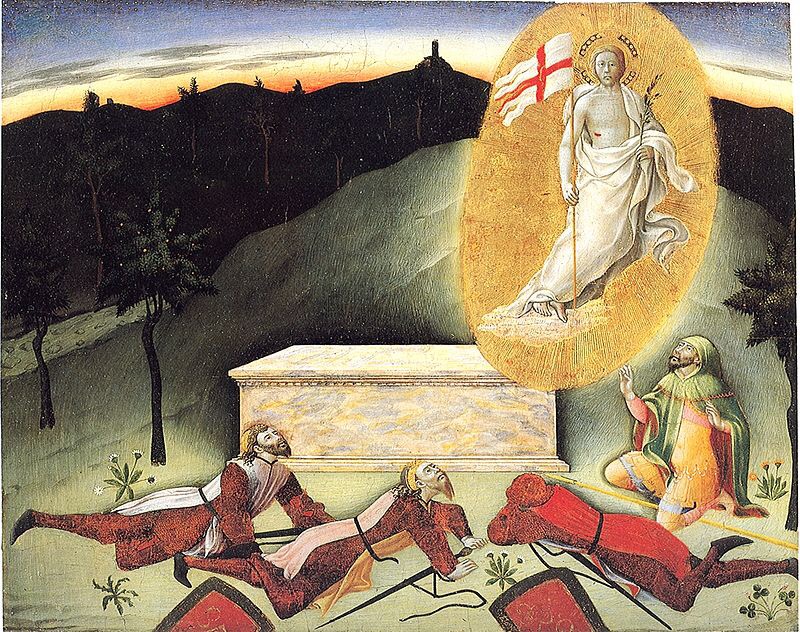
In our Christian faith, the death of Jesus gives rise to the transformed and living Christ.
In the HIndu tradition, Shiva is known as the destroyer, transformer and creator. His dance of creation and destruction depicts the universal cycle of life.

Kali, Shiva’s consort, carries a more dreadful aspect of the divine. It’s told she got carried away on a killing spree destroying everything in her sight. Yet two of her many hands bless worshipers saying, “Fear not.” These Hindu gods scatter the ashes of the universe knowing they are a source for ensuing creation.
Norse mythology gives us Hel, goddess of death and the underworld of which she is queen. Her face is half flesh-colored 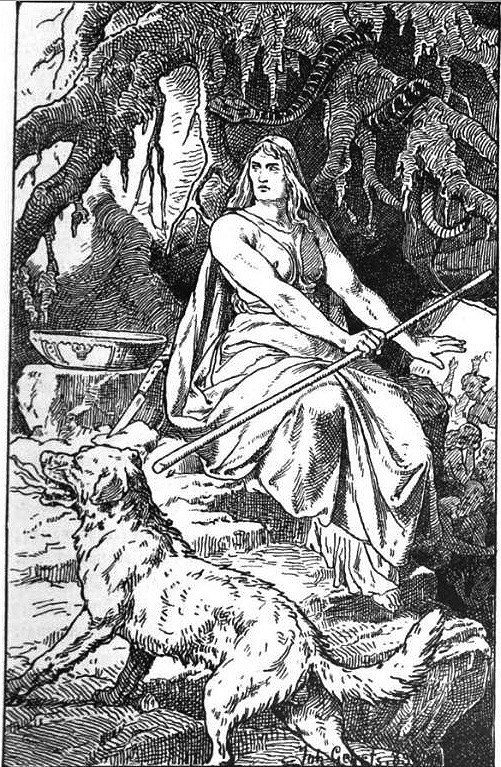 and half blue. Our English word hell comes in part from her name meaning “one who covers up or hides something; a concealed place.”
The womb is a concealed place. Any woman who has given birth knows the primordial force of instinctual contractions that compel birth. We find ourselves powerless, too, over the fact of death and bodily decay. (But we are more than our physical body.)
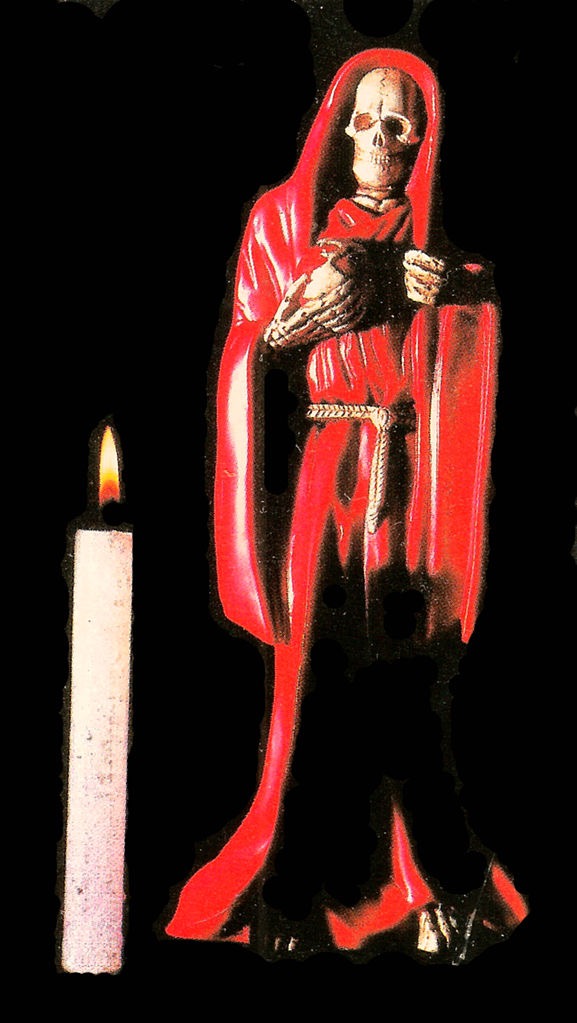
Cultures have personified death in many ways. In the Latin American folk tradition we have the saintly skeleton, La Santa Muerte.
 Of course, we’re all familiar with the Grim Reaper.

The word purging (in the service of purification) is often used when speaking of Pluto’s energy. The sense here is that what has become poisonous or decayed must be brought to the surface and eliminated, whether that is something in our social or political 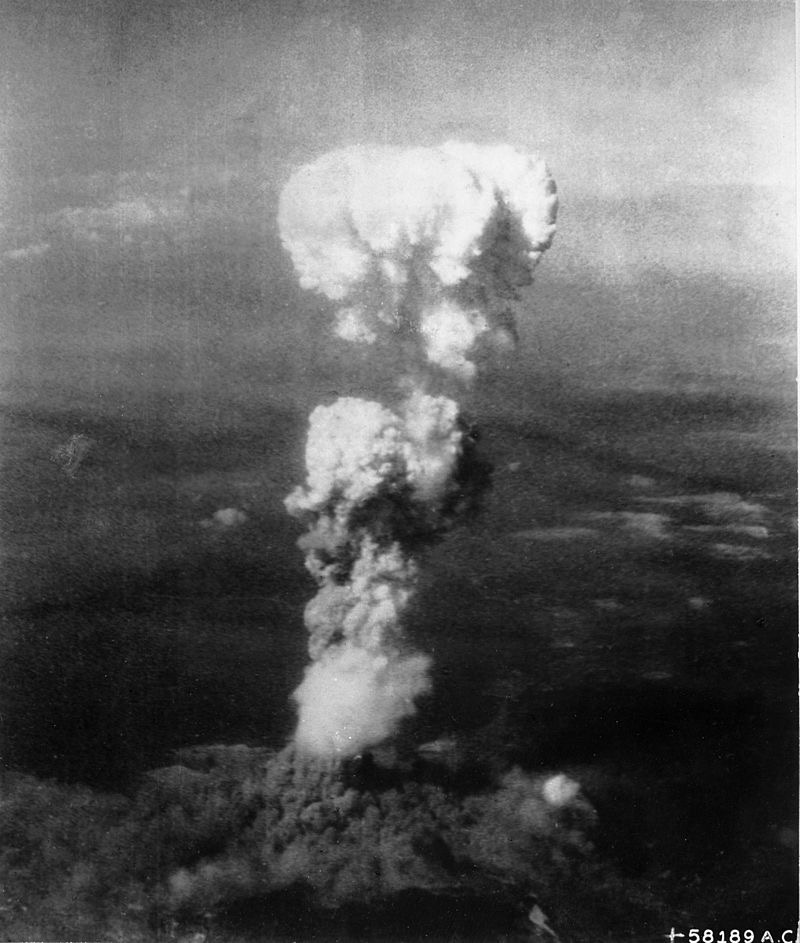 life or in our personal life. Violent upheavals are associated with Pluto. Imagine massive wartime chaos, ethnic cleansing of a people, the atomic bomb, erupting volcanoes, raging wildfires or even a stock market crash. Death may be inexplicably violent – revenge killings, the gas chamber, be-headings, deathly torture. What shadows of evil lurk in our hearts!
Sudden, unanticipated upheavals and crises do arise in our 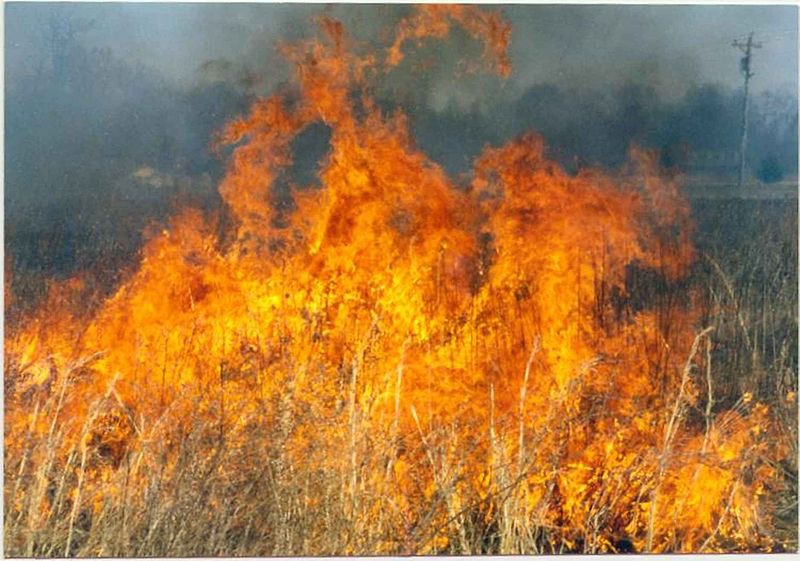 personal lives. I recently heard from one friend whose family lost home and possessions in the recent West Coast wildfires. Another friend is suffering a diagnosis of late stage ovarian cancer.
The pattern of personal renewal and transformation, though, may be slow, like Pluto’s orbit, with a gradual dying of old, outworn attitudes, habits or repressions ready to be regenerated. Hidden in the mystery of our evolution is a movement to  transcendence and new life in a dynamic interplay where chaos and crisis have a purposeful role to play. Sometimes it feels as if we’re going to hell and back when “all hell breaks loose” and we face circumstances out of our control that come upon us unbidden. As I’m writing this post, the world has been saddened to see the photo of the Syrian child drowned on the coast of Turkey. It’s hopefully spurring countries toward policies of greater compassion for migrants and refugees. Mass migrations of peoples occur cyclically. Remember the Vietnamese boat people of the 70’s?
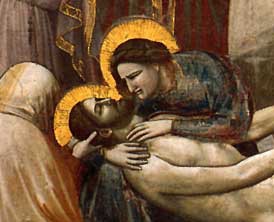
When I think of suffering, I’m drawn to this beloved image of the face of Mary grieving over Jesus (from a small section of Giotto’s painting, The Lamentation).
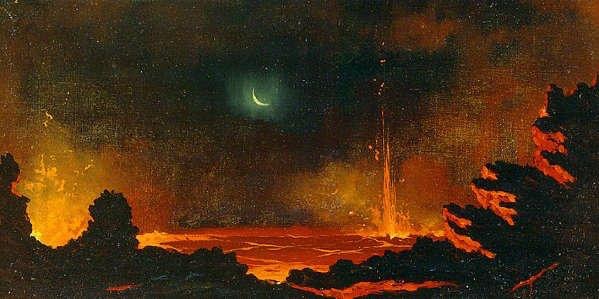
Pluto rules sex, anything forbidden or taboo and all things underground such as sewers, mines, caves, graves and precious metals. It rules the titanic forces of volcanoes,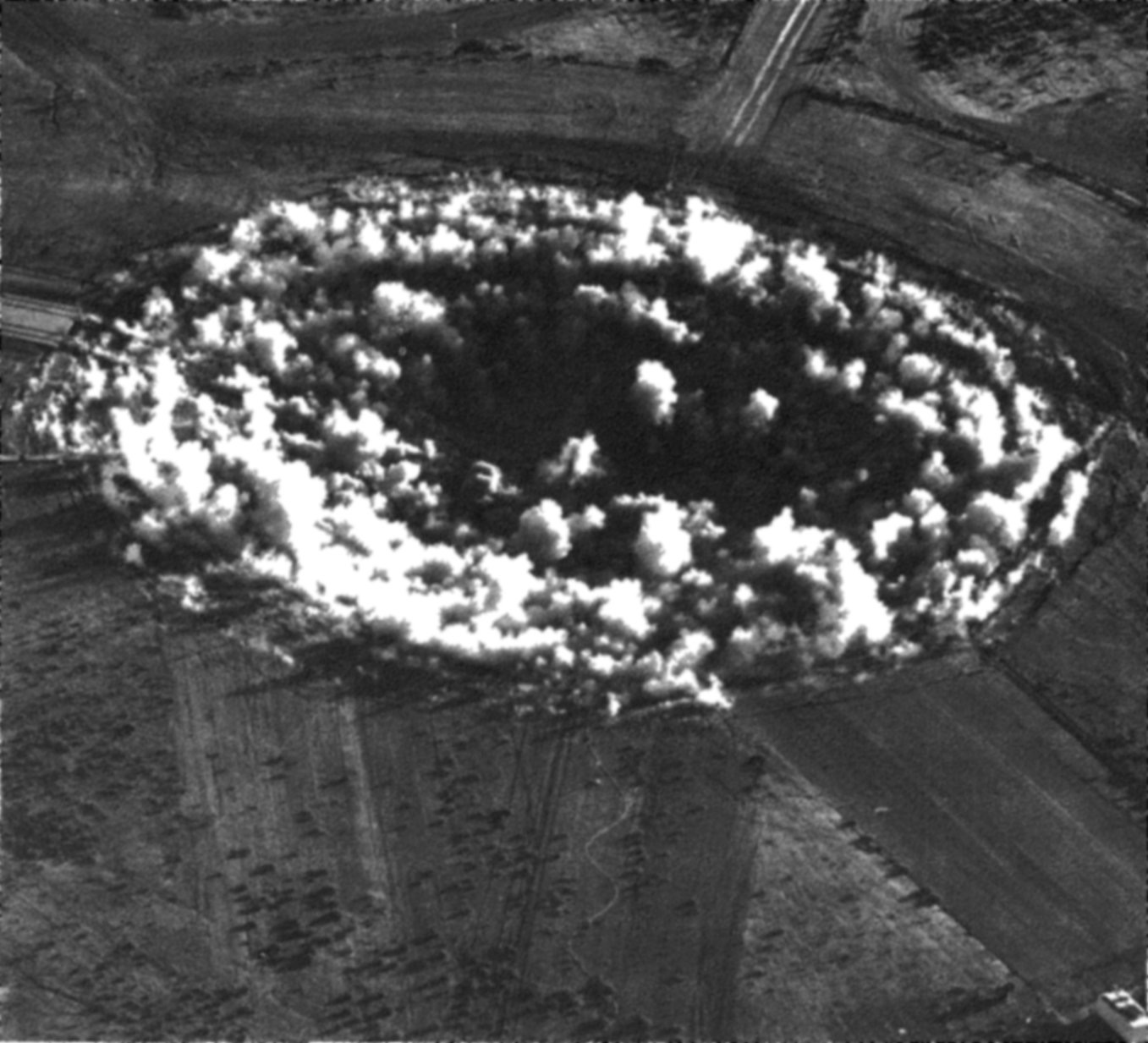 earthquakes and nuclear power as well as poisons, toxicity and decomposition. Professions involving the underground are associated with Pluto. Examples would be dictators, gangsters, human traffickers, spies, detectives and even depth psychologists who explore the deep unconscious where what is hidden or suppressed may come to light.
Pierre Teilard de Chardin was comfortable with Pluto’s language of sudden upheaval when he wrote the following about Christ:
“Like a thunderbolt, like a conflagration, like a flood, all the swirling elements of the universe will be seized by the attractive power of the Son of Man, to be brought into unity.” Le Divine Milieu
He spoke of death, saying “…Its fatal power to decompose and dissolve will be harnessed to the most sublime operations of life. What was by nature empty and void, a return to bits and pieces, can, in any human existence, become fullness and unity in God.”
How fearful it can be for us to ponder death by itself, outside the cycle of birth, death and rebirth. No phase exists without the other. Each is a passage to another form of life. The pattern of this universal process is a sacred mystery with a transcendent and hidden beauty. And love shines through every part of it.
My friends, if you experience pain or suffering in the face of sudden crises or death, may you trust in the overwhelming love of the Divine. May you trust the meaning of your suffering as you cross thresholds that transform. May your compassion for yourself and others experiencing the same sufferings be boundless.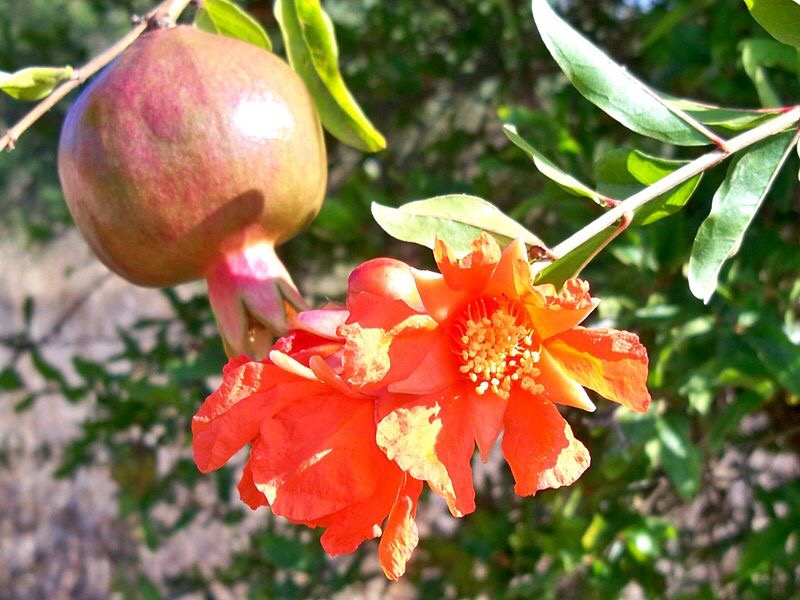
Mary Catherine


Dear Mary Catherine, aka Michele, What a wonderful gathering of Plutonian information and images! Even as the astronomers have downgraded little Pluto because of size, the world sees more and more of his (?) searing–and, yet, transforming–energy. Pluto surely is the planet of our times. Thank you for your beautiful pages–they’re all savored here in L.A. as you produce them. Celestial wishes! Betsy
LikeLike
Betsy – Pluto really surprised me and delighted my heart as I learned something of its mysteries. It’s with deep gratitude that I let this blog series rest (until another planet, yet undiscovered, beckons to us). For your unfailing support and wise guidance always – thank you!
Sending love,
Michele
LikeLike